
Article: How to Wash a Silk Pillowcase (Without Ruining It)

How to Wash a Silk Pillowcase (Without Ruining It)
How to Wash a Silk Pillowcase (Without Ruining It)
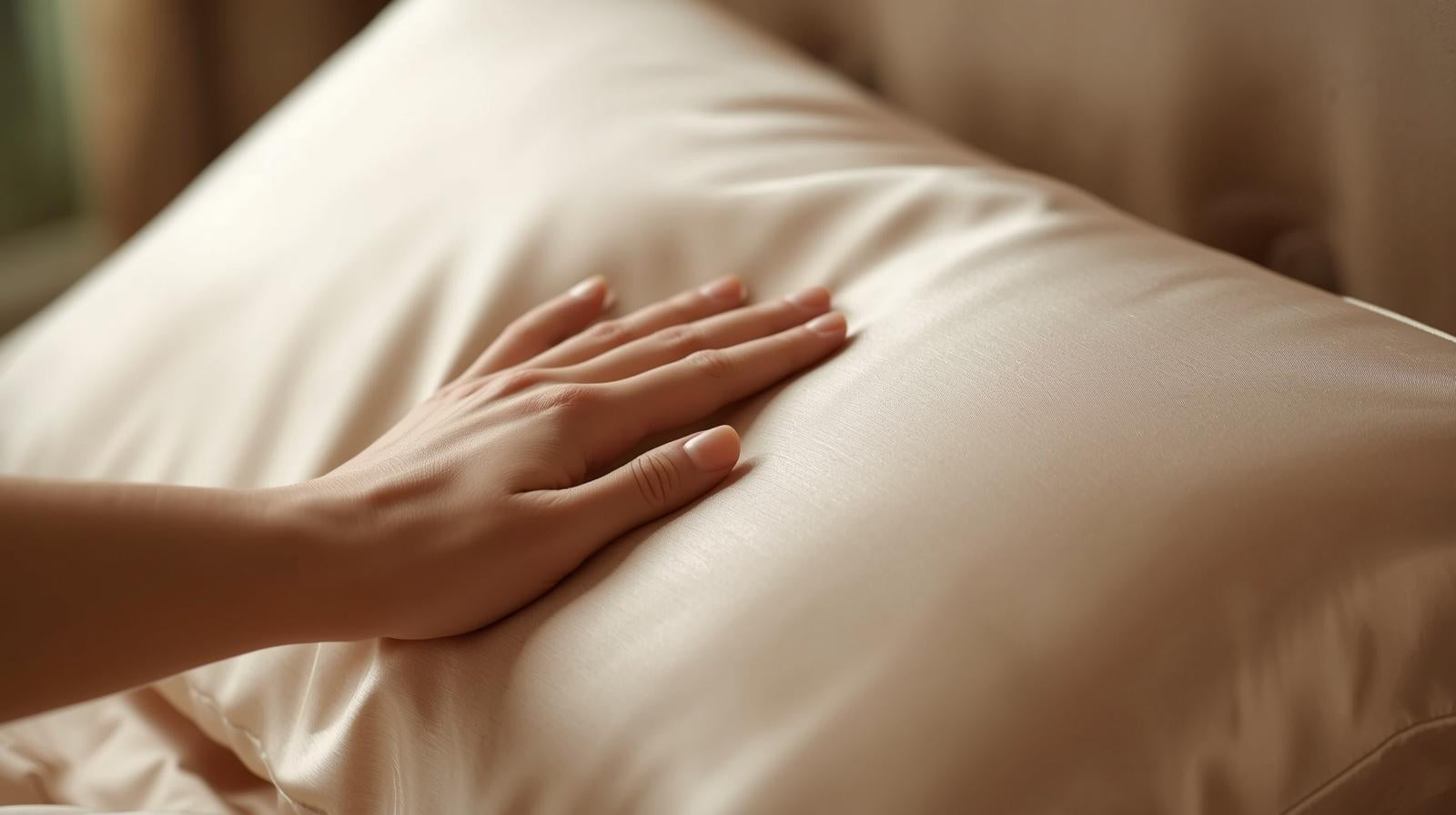
The safest way to wash a silk pillowcase is by hand, in cool water with a pH-neutral, enzyme-free detergent, gently swirling rather than scrubbing. Higher-momme silk (22+) made from Grade 6A mulberry can also go in the washing machine, inside a mesh bag on a cold, delicate cycle. Lower-momme silk is safer hand-washed. Which method is right for you comes down to two things: silk grade and momme weight.
What You'll Need Before You Start
- A clean sink or basin
-
Cool water (below 30°C / 86°F)
-
A pH-neutral, enzyme-free detergent made for silk or delicates
- Two clean white towels
- A mesh laundry bag (for machine washing)
- White vinegar (optional, for rinsing)
Why Silk Needs Special Detergent
Silk isn't a synthetic fiber you can throw generic detergent at - it's spun protein, and that changes the chemistry entirely. Raw silk fiber is made of two proteins: fibroin, the crystalline core protein that gives silk its strength and signature shine, and sericin, the gummy protein that binds fibroin filaments together before it's washed away during manufacturing. Together they're roughly 70–75% fibroin and 25–30% sericin by weight in the raw fiber.
Here's the part most care guides skip: many everyday laundry detergents contain protease, an enzyme designed to digest protein-based stains like blood, grass, and egg. Protease can't tell stain protein from fabric protein - it breaks down peptide bonds in both. Used repeatedly on silk, it thins the fibers and eventually causes tiny holes, usually starting at the seams.
Before you wash, avoid:
- Enzyme or "bio" detergents (check the label for protease, amylase, or lipase)
- Chlorine or oxygen bleach
- Fabric softener
- Hot water
How Do You Wash a Silk Pillowcase by Hand? (Step-by-Step)
Hand washing is the gentlest method and the safest default for any momme weight, especially under 19–22 momme.
Proper care helps preserve all the silk pillowcase benefits for your skin, hair, and sleep.
Colorfastness Test First
Before your first wash, dab a damp white cloth on a hidden inside seam. If color transfers, skip home washing and take the pillowcase to a professional cleaner instead.
Soak, Swirl, Rinse, Press
- Fill a basin with cool water and a small amount of pH-neutral silk detergent.
- Turn the pillowcase inside out and submerge it fully.
- Gently swirl and press through the water for 2–3 minutes - don't scrub or twist.
- Drain, refill with clean water, and rinse until no suds remain (3–4 rinses).
- Press out excess water with your hands; never wring wet silk, since the fibers are weakest when saturated.
- Roll in a dry towel and press gently to pull out remaining moisture.
- How to Machine Wash a Silk Pillowcase Safely
If your pillowcase is 22 momme or higher and the care label allows it, machine washing is workable with the right setup.
Cycle, Temperature & Mesh Bag Setup
Turn it inside out, place it in a fine-mesh laundry bag, and run the delicate or hand-wash cycle in cold water with the lowest spin speed. Skip top-loading machines with a center agitator if you can - the twisting motion is harder on silk than a front-loader's tumble.
Detergent Amount & What to Avoid
Use less detergent than the bottle recommends; leftover residue stiffens silk. Stick to a silk-specific or delicate formula, and never add bleach or fabric softener - both damage the fiber in ways silk can't recover from.
How Often Should You Wash a Silk Pillowcase?
Most sleep and bedding experts recommend washing every one to two weeks, though a few factors can shorten that window:
- Hair products – leave-in conditioners and serums build up faster than plain skin oil.
- Night sweats – sweat is mildly acidic and can weaken fibers and cause yellowing if left to sit.
- Skin type – oilier skin means faster residue buildup and a shorter wash cycle.
- Allergies - with dust sensitivity or acne-prone skin, weekly washing is worth the extra effort.
Wash immediately if:
- There's a visible stain (makeup, food, blood)
- The pillowcase smells noticeably of sweat or product
- You've been sick or have an active skin infection
Regular washing also helps maintain a clean surface that's gentler on your complexion, one reason dermatologists recommend silk pillowcases.
How to Remove Stains From a Silk Pillowcase (By Stain Type)
Generic "spot cleaner" advice doesn't cut it on silk - different stains need different chemistry, and the wrong one can set a mark permanently or bleach the dye.
Oil & Makeup Stains
Sprinkle a little cornstarch or baby powder on the mark and let it sit for 20–30 minutes to absorb the oil before brushing it off and dabbing with diluted detergent.
Sweat & Protein-Based Stains
Rinse from the back of the fabric in cold water to push the stain out rather than deeper in. A short soak in cold water with a few drops of white vinegar can help lift residue without an enzyme detergent.
Drool & Food Stains
Blot (don't rub) with a clean cloth and cool water, then treat with a small amount of pH-neutral detergent worked in gently with your fingertip.
|
Stain Type |
Safe Treatment |
What to Avoid |
|
Oil & makeup |
Absorb with cornstarch, then dab diluted detergent |
Alcohol-based removers, hard scrubbing |
|
Sweat & protein |
Cold rinse from the back, light vinegar soak |
Hot water, enzyme (protease) detergent |
|
Drool & food |
Blot with cool water and mild detergent |
Stain sticks, sprays, or brushes |
For any stain that doesn't lift after one gentle attempt, stop - repeated home treatment is more likely to damage silk than remove the mark. A professional cleaner is the safer next step.
How to Dry a Silk Pillowcase (and What to Avoid)
Air-Drying Method
After rolling the pillowcase in a towel to remove excess water, lay it flat on a dry towel or hang it on a padded hanger away from direct sunlight, which can fade color and weaken fibers over time.
Why You Should Never Tumble Dry
Heat is silk's biggest enemy. Tumble drying - even on low - can shrink the fabric, roughen its texture, and permanently dull its shine. Air drying takes roughly 45 minutes to a couple of hours, a small trade-off for a pillowcase that keeps its sheen for years.
7 Mistakes That Ruin Silk Pillowcases
- Washing with enzyme ("bio") detergent
- Using hot water instead of cold
- Wringing or twisting wet silk
- Tumble drying on any heat setting
- Skipping the colorfastness test on colored silk
- Letting stains sit instead of treating them the same day
How to Keep Silk Soft and Shiny Long-Term
-
Vinegar rinse: A tablespoon of white vinegar in your final rinse (or the fabric softener dispenser if machine washing) clears leftover detergent and restores luster, since its mild acidity offsets the alkalinity most detergents leave behind.
-
Rotation between pillowcases: Keeping two or three in rotation reduces how often any single one gets washed and dried, slowing the gradual wear from repeated cycles.
-
Proper storage: Store silk clean and completely dry, folded loosely in a breathable cotton bag rather than plastic, and away from direct heat or sunlight.
Conclusion
Wash it cold, skip the enzymes, and let it air dry – that's the whole formula for silk that stays soft and glossy for years instead of months. Match your method to the momme weight, treat stains the same day, and rinse with vinegar now and then. [Explore our full guide to silk pillowcase benefits.]
FAQS
Q1. How do you wash a silk pillowcase?
Hand wash in cool water with a pH-neutral, enzyme-free detergent, gently swirling and rinsing without wringing. Higher-momme silk (22+) can also go in the machine inside a mesh bag on a cold delicate cycle.
Q2. Can you machine wash a silk pillowcase?
Yes, if it's rated at least 22 momme and the care label allows it. Use a mesh bag, cold water, the delicate cycle, and a small amount of gentle detergent - no bleach or fabric softener.
Q3. How often should you wash a silk pillowcase?
Every one to two weeks for most people, more often with heavy hair or skin products, night sweats, or oily or acne-prone skin.
Q4. Can you use regular detergent on silk?
Not recommended. Most regular detergents are either too alkaline or contain protease enzymes, both of which break down silk's protein fibers over repeated washes.
Q5. Does washing reduce silk's skin and hair benefits?
No - washing preserves those benefits by removing the oil and product buildup that dulls the fabric's smooth surface. Skipping washes is what reduces the benefits, not the washing itself.
Q6. Can you iron a silk pillowcase?
Yes, on a low, silk-appropriate setting with a press cloth, while still slightly damp. Many people skip it entirely, since a hand-smoothed pillowcase releases most wrinkles within a night's sleep.
%0AThe%20safest%20way%20to%20wash%20a%20silk%20pillowcase%20is%20by%20hand,%20in%20cool%20water%20with%20a%20pH-neutral,%20enzyme-free%20detergent,%20gently%20swirling%20rather%20than%20scrubbing...)